
Tunisia Rally Stage Tour Maxienduro
tailored specifically for maxienduro motorcycles.
Tunisia Rally Stage Experience Tour
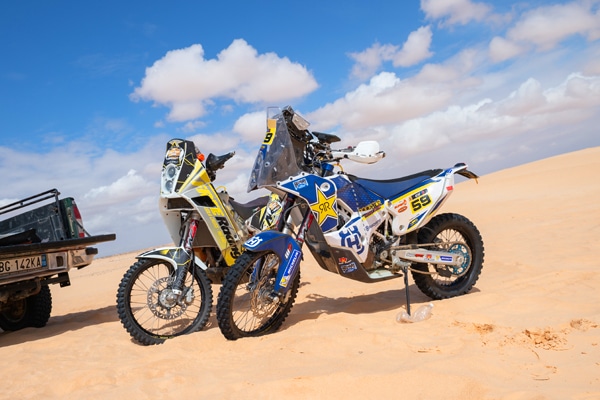
Perfect for specialized single-cylinder motorcycles.
Tunisia Rally Training Road to Dakar
An ideal training program for those who want to compete in international competitions, using cap, road book, and trip master.
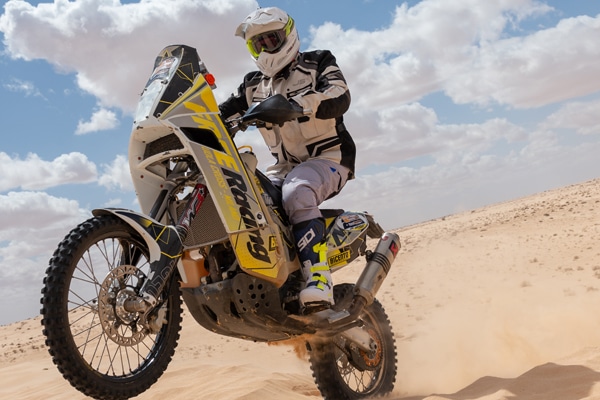
ENDURO
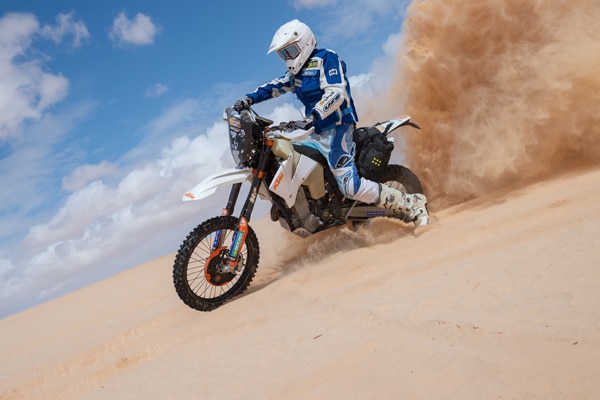
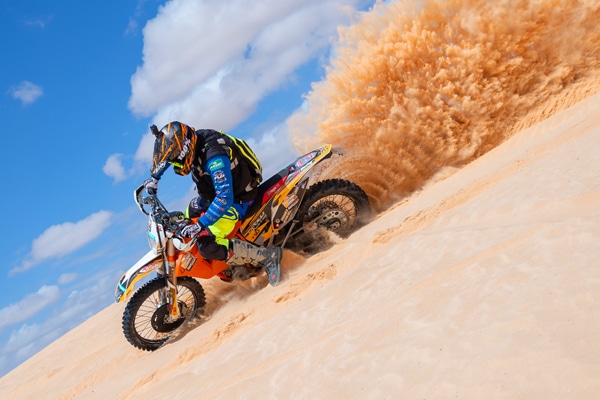
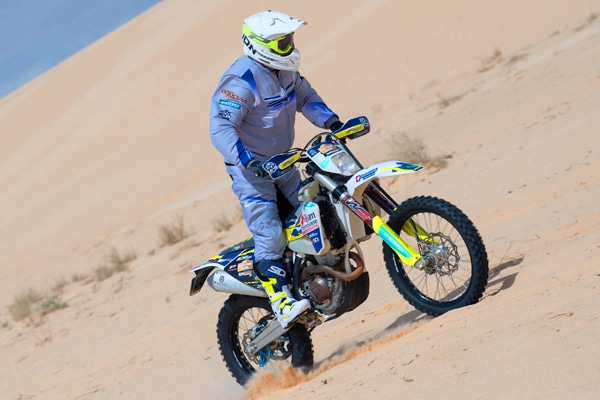
LIGHT ENDURO 4 OR 2-STROKE
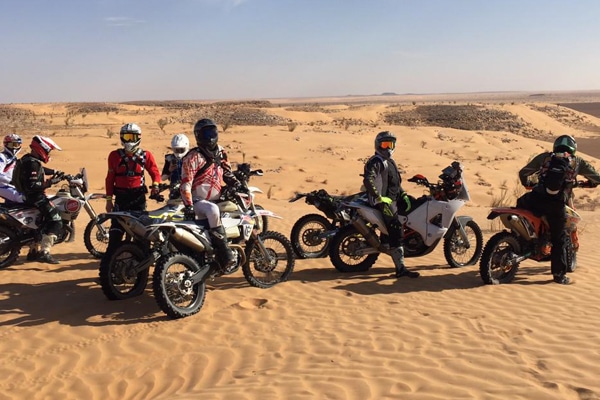
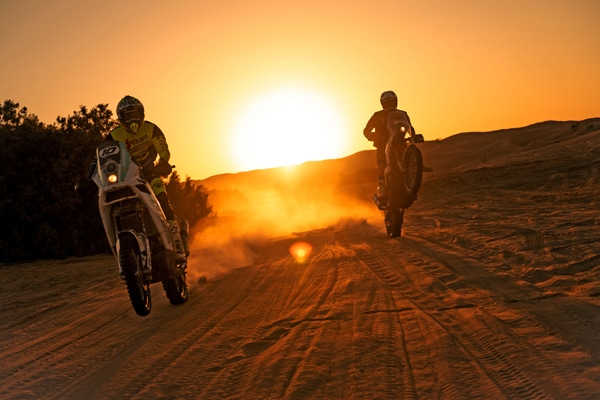
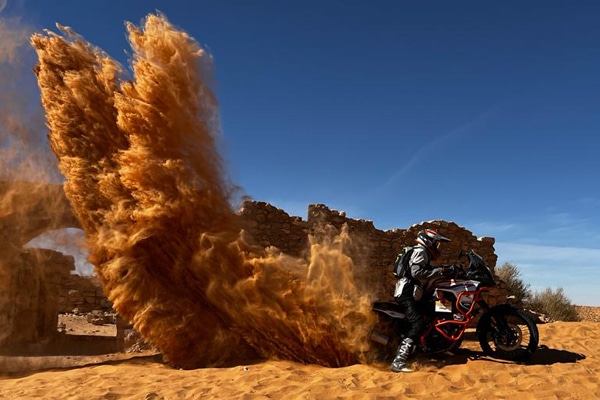
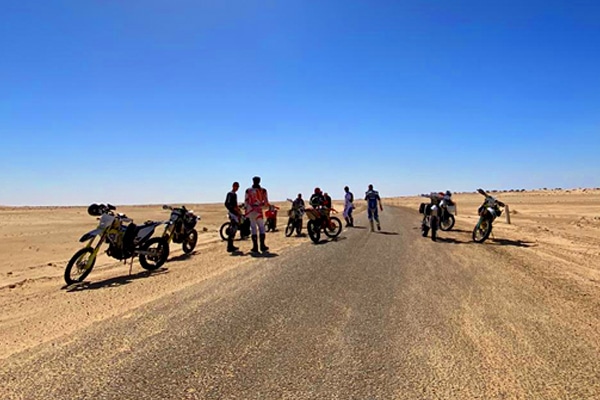
An ideal tour course for motorcyclists who want to learn sand-riding techniques, the use of navigation tools, improve their skills and have fun in the desert moors of Tunisia. Excellent as preparation for the big races in the desert.
Level: Practitioners – Amateurs – Competitors
Routes: 100% Sand
Range: 150Km
GPS requirement – Road Book optional
MAXIENDURO
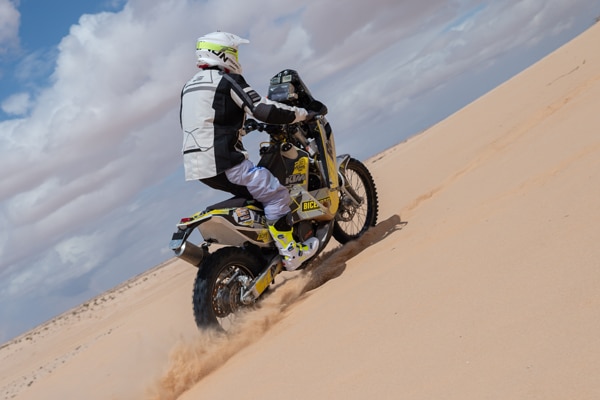
TWO-CYLINDER OR LARGE SINGLE-CYLINDER ENGINES
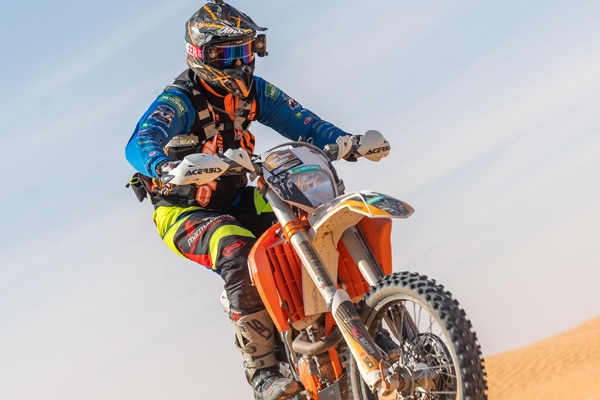
A course-tour for drivers who want to tackle the desert for the first time, following a mixed course designed to guarantee safety and fun: asphalt, gravel and sand within everyone’s reach. A formula that allows participants to experience a real rally with stops/restaurants in places of special scenic and cultural interest.
Level: Practitioners – Amateurs (for the first time in the desert)
Routes: Mixed
Range: 150Km
Highly recommended GPS
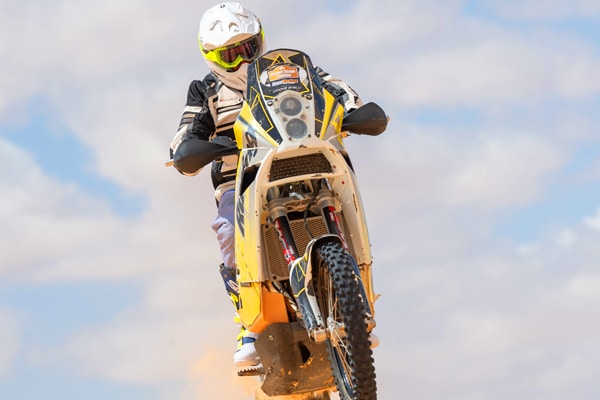
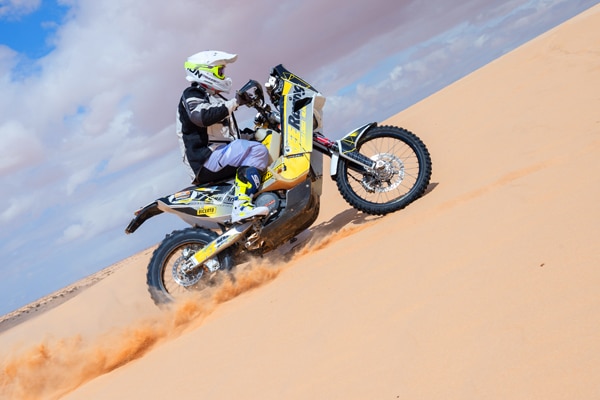
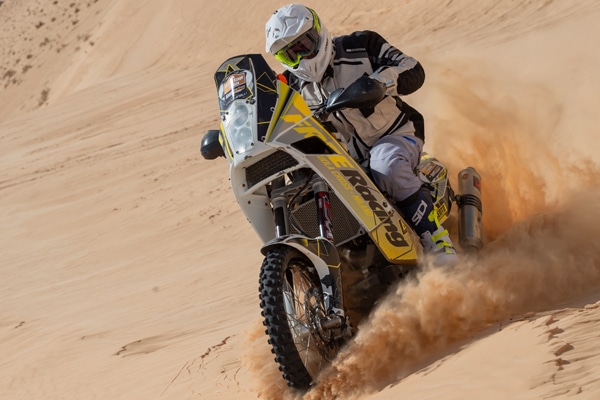
sand course in Italy to prepare for the Tunisian rally stage.
First Sand
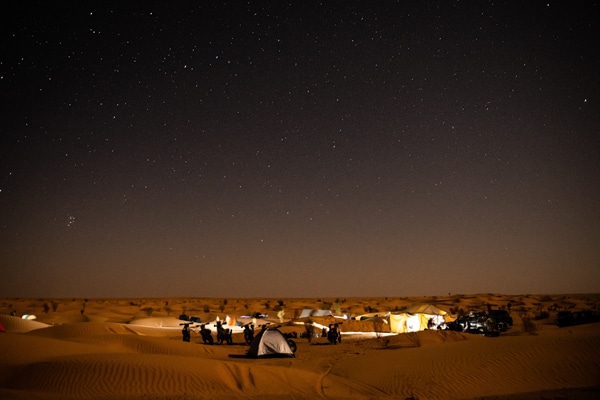
Stage tour desert differs in its variety of simple but varied routes that will help you improve your technique and safety for tackling the first sand tracks and for those who want to try their hand at the first dunes, but always optional. 1 night in the desert with tent organisation Course gps only cap and tracks
Experts
Stage tour rally desert medium-difficult where you will tackle dunes and sand tracks over several days where you will acquire the technique for surfing on the dunes For those who want navigation course with road book and trip master. 2/4 nights in the desert with tent organisation Course gps only CAP
Single-cylinder engines only
Stage tour rally desert difficult only dunes and challenging transfers. with 4 nights in the desert with tent organisation Course gps only CAP
Program
When
March 15-22, 2026
See the dates on the calendar
Location
Info
Subscriptions
Fill in the Form and send it to info@freeracing.it
UPCOMING EVENTS

TUNISIA DAKAR STYLE Single-Cylinder Motorcycles – Luxury Desert Rally Experience November 15–22, 2026
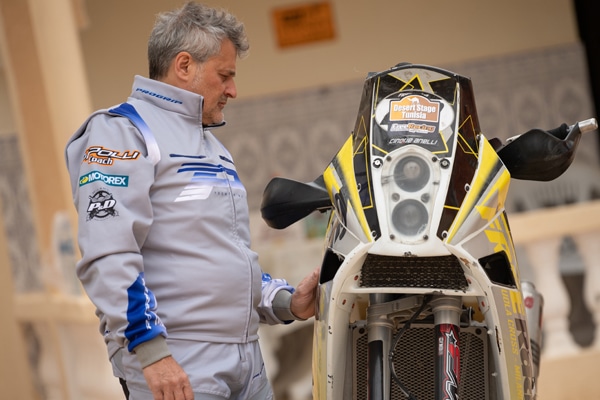
Discover the Grand Erg Oriental and its vast dunes, staying overnight in luxury 5-star tented camps. An experience designed for those who want to learn how to navigate the desert in complete safety, while enjoying a comprehensive and progressive program. Your guide will be Coach Oscar Polli—2008 World Rally Champion
Desert stage tour Experience Tunisia – Maxienduro e Mono prima sabbia – 22/29 Marzo 2026
A motorbike experience for riders who want to tackle the desert for the first time with their maxi-enduro bikes with a dedicated route, designed to ensure learning and fun in safety with the Freeracing School (present in Tunisia since 1996) and Coach Oscar Polli who will be your guide on this experience tour.
TUNISIA DAKAR STYLE Single-Cylinder Motorcycles – Luxury Desert Rally Experience November 15–22, 2026
Discover the Grand Erg Oriental and its vast dunes, staying overnight in luxury 5-star tented camps. An experience designed for those who want to learn how to navigate the desert in complete safety, while enjoying a comprehensive and progressive program. Your guide will be Coach Oscar Polli—2008 World Rally Champion
ENDURO MOTORCYCLE PREPARATION
Two types of preparation depending on whether the goal of our trip is an adventure tour or preparation for an African rally.
In the first case, preparation is relative and mainly involves a thorough mechanical check to increase the reliability of the vehicle in relation to its “weak points,” which every motorcycle has, as well as those aspects related to the terrain and specific climatic conditions that must be faced.
In the second case, the preparation of the vehicle must go a step further, not so much in the search for greater engine power, which is useless and often achieved at the expense of reliability, a fundamental element, but in the search for an optimal cycling balance in consideration of the high speeds expressed, calculating the greater weights due to the adoption of additional tanks necessary to guarantee a range of approximately 350 km. In addition to the mechanical modifications, all the necessary navigation equipment must be installed on board.

HANDLEBAR RISER
FOOTRESTS
HAND GUARDS
ANTI-BREAKAGE LEVERS
STEERING DAMPER
TANKS
In this case, in terms of size, weight (…and cost!), we will not place too much strain on the standard motorcycle, ensuring normal rideability. The materials normally used are plastic, fiber, or aluminum, all of which are suitable. Of extreme importance is the quality of construction and the possibility of repairing them in an emergency in case of breakage due to possible falls.
For twin-cylinder bikes (e.g., BMW Gs or KTM 990), there is little that can be done, and depending on the model, extensions for existing tanks or new front tanks with greater capacity must be obtained (if necessary). The bike’s handling decreases when full, but given the overall weight of the bike, the balance is not significantly affected. Let’s see what the options are for single-cylinder bikes:
Front tank with a capacity of 25 liters but similar in shape to the original: this solution is the most economical option but puts a lot of weight on the front end when the tank is full, so in addition to a special suspension setting, you will need to take this new weight into account when riding, which will make the first hundred kilometers or so less than pleasant.
Front tank with a capacity of 13 liters combined with rear tanks (1 or 2) for a capacity of 10 liters: perhaps the most balanced option in terms of modifications, costs, and riding pleasure, guaranteeing a range of about 250 km. The purchase of the rear tank is generally expensive, and you need to check its availability on the market for your specific motorcycle model.
Front tank capacity of 20/22 liters with rear tanks (1 or 2) for a capacity of 10/20 liters: generally consisting of two separate front fiber tanks with a capacity of approximately 10/12 liters each. Compared to the previous configuration, this tank layout has the advantage of lowering the weight of the fuel and reducing the lateral bulk, which improves handling. Furthermore, as they are separate, in the event of a fall and tank breakage, you can continue your journey, but they generally require an additional fuel pump. There are usually two rear tanks positioned next to the number plates. This is a specific solution for each motorcycle model, the best in terms of handling and additional weight, but generally very expensive. However, it is the only one with over 40 liters to guarantee a range of up to 450 km.
AERODYNAMIC PROTECTION
HEADLIGHT PROTECTION
Our advice is therefore to protect it. Metal grilles that can be cut to size and fixed with a little silicone are better than nothing, but we believe that a small sheet of Plexiglas cut to size and fixed with four screws to the fairing is more suitable.
SUSPENSIONS
Basically, desert settings require a few more clicks, as the suspension must absorb the greater compression generated by jumps at speed due to sand dunes or rough terrain. If it is not possible to carry out a setting session on similar terrain, the rider must pay attention to this fundamental aspect for safety and enjoyment on the first day.
The Tunisia stage also includes a setting course.
RUBBER AND MOUSSE
For Baja or Desert single-cylinder bikes, depending on the weight and power of the bike, Desert tires are preferable for heavier or higher-performance single-cylinder bikes. If possible, use mousse instead of inner tubes to avoid unpleasant stops to repair inevitable punctures. Repairing a tire in the middle of the desert is an unforgettable experience, but I assure you that you will gladly do without repeating it. If you take care not to destroy the mousse during fast transfers, especially on asphalt, they can last until the end of your ride.
However, whether you use mousse or tubeless tires, put some spare inner tubes in your backpack, preferably heavy-duty ones.
ALTERNATIVE TO MOUSSE
TUbliss® system: This type of product is actually a tubular tire system that firmly locks the tire to the rim, making it “tubeless” and eliminating the need for a traditional inner tube, improving the bike’s traction and handling. The tire basically becomes a “run flat,” so there is no longer the problem of puncturing the inner tube.
Even if the tire is damaged, the back of the tire remains attached to the rim, allowing you to continue riding. The system also protects the rim from dents and accidental breakage by firmly securing the tire, keeping the sidewalls in the correct position and avoiding the risk of bending typical of traditional inner tubes.
AIR FILTER
ENGINE GUARD PLATE
For an adventure tour, the ones normally used are already suitable, but if you want to participate in an African rally, then it may be worth considering purchasing a crash bar that already has a 3-liter water reserve integrated, as required by the international federation, a tool compartment, and possibly the possibility of housing an additional fuel pump.
NAVIGATION EQUIPMENT: GPS AND ROAD BOOK
Navigating in the desert is like navigating the ocean: there are no roads! We should therefore leave our car navigation systems with speed camera and gas station alerts at home and get devices with some additional features that are, above all, sturdy and ultra-reliable.
There are now all kinds of modern GPS devices on the market at all price points. The fundamental difference is that some types are cartographic (color or monochrome), i.e., they show a map of the area with the main landmarks, while others (the cheaper ones) are only numerical, indicating the direction to a previously entered point, generally called a waypoint, whose map coordinates are known.
An excellent GPS product for off-road motorcycles is the Garmin 60 cs-x map 62 cs and all categories of the 60 and 62.
Simple aluminum support for GPS.
Entering multiple waypoints creates a route that will start from our current location and wind through intermediate points to take us exactly to our destination. In some cases, you can prepare routes at home or in the evening using special PC programs and transfer them to the navigator, avoiding tedious entries.
If we follow the directions provided by the GPS navigator, not only will we know where we are at all times, but it will also be impossible to get lost, as the direction we should take will be continuously updated by satellite references, without taking into account the morphological conformation of the ground.
Although not essential, the cartographic type is preferable because when entering waypoints, we will be able to view the route on the map and immediately notice any input errors.
Navigators can be powered by batteries or connected to the motorcycle’s electrical system; our impartial advice is to have both. Battery power alone not only forces us to have a sufficient supply for each trip, but can also cause other problems because the equipment is subject to strong shocks and vibrations and, in the long run (not even too long…), the batteries begin to move around inside their compartment with the real possibility of losing contact and turning off the navigator. Direct power from the motorcycle’s electrical system eliminates this problem at its root; the connection cable is easy to find and inexpensive.
The real challenge, however, is navigating a predetermined route without the aid of GPS, using it only as a compass with hidden waypoint indications that are displayed only in emergencies.
Directions are provided by a “papyrus” called a ROAD BOOK, which indicates distances, directions, and some comments on the terrain. It is therefore necessary to have equipment that allows you to store the papyrus and unroll it, as well as displays of the distance traveled with controls on the handlebars so that you don’t have to take your hands off the handlebars while riding. All this is possible by installing a road book holder and trip master on the motorcycle. Navigating with this equipment opens up a new horizon for the rider, projecting them into a dimension of absolute adventure, rewarding them at every point reached until they arrive at their desired destination.
TELEPHONES
We believe it is necessary to have at least one per group so that you can communicate with other travelers but, above all, call for help in case of emergency.
Don’t forget the list of local emergency numbers!
EMERGENCY EQUIPMENT
The best way is to pack our mechanical survival kit in a large, sturdy belt bag, which will mainly consist of: a flathead and Phillips screwdriver, a Phillips screwdriver, the main wrenches for dismantling the motorcycle (fixed or Allen keys), a wrench for the wheel nut bolts, pliers, a multi-purpose knife, and a small flashlight.
In addition to tools, some components are essential, such as spare fuses, spark plugs, plastic ties, electrical tape, duct tape, a spare chain link, clutch and brake levers, gear shift pedal, front inner tube, a small hand pump, some of the main bolts, a piece of fuel hose with a quick connector, and two-component paste in case of engine casing breakage.
SPARE EQUIPMENT
Be sure to include all the components that only your beloved bike consumes and that only you know about.
FREETIME CLOTHING
Always pack a swimsuit so you can take a dip in the hotel pools or the hot springs within the oases.
If you are traveling during the winter, don’t forget a padded jacket, which you will appreciate in the early morning and evening hours.
TECHNICAL CLOTHING
Pants and shirt: those normally used for local enduro riding are fine, but for pants it is better to choose those with leather (natural or synthetic) reinforcement on the inside of the knee. Jacket: although it may seem unnecessary given the temperatures, a jacket (with removable sleeves) is essential for several reasons: it limits perspiration and therefore excessive dehydration, protects against rocks and stones that may be thrown up by the bikes in front of us, and has plenty of pockets and compartments where we can store the large amount of items we need.
Boots:
standing riding requires good quality boots, especially with a sturdy sole that is not too flexible (SIDI recommended).
Helmet:
cross/enduro type, removable so that the interior can be washed and with excellent ventilation, preferably light in color (Premier recommended).
Gloves:
made of technical fabric, not too light, preferably with gel padding on the palm, as we will be covering many miles and comfort is priceless (ProGrip recommended).
Glasses:
carefully evaluate dust resistance and ventilation, so in addition to the classic sponge in contact with the skin, it is best to have additional reinforcement as a support base and openings for ventilation. It is absolutely necessary to have dark or mirrored lenses, even as spares (ProGrip recommended).
Knee pads:
Protection and comfort are the two elements you need to consider when choosing knee pads, bearing in mind that you will be riding mostly standing up and sometimes sitting down, so if they are articulated and have adequate padding, they should be preferred (Zandonà recommended). The use of braces is also important (BioKSport recommended).
Chest protector:
Although bulkier, a mesh type with various protections, including a back protector that protects the entire length of the spine, is necessary. If it does not have lumbar support, provide an additional band (Zandonà recommended).
Underwear:
For both shirts and shorts, the best option is obviously a breathable fabric such as Dry, to prevent sweat from stagnating on the skin. Knee-length shorts have the advantage of protecting the inner thigh from rubbing between the skin, pants, and the side of the motorcycle. The quality of this clothing is determined not only by the quality of the fabric but also by the absence of seams that could cause skin irritation due to friction. For socks, you can use technical socks available on the market, reinforced at the points of greatest friction (Accapi recommended).
Camel Bag:
Essential and vital, it will be your companion during long stages. We recommend choosing a camel bag with a minimum capacity of 1.5/2 liters. It is a good idea to bring a spare bag and straw.
Waterproof suit:
It may seem strange, but even in the desert it rains at the end of winter, for example, and in northern Tunisia, encountering a storm is not so unlikely, so let’s equip ourselves with a lightweight waterproof suit (ProGrip recommended).
PARAMEDICAL PRODUCTS
SUPPLEMENTS AND ENERGY BARS
Energy bars:
there are bars for all tastes and flavors: chocolate, coconut, vanilla, tropical, banana, chocolate; rich in different amounts and combinations of proteins, carbohydrates, fats, vitamins, minerals, flavorings, etc., an offer that risks disorienting and confusing consumers.
Information and suggestions rarely accompany the sale of bars, so let’s try to clarify things so as not to choose the wrong product and achieve results that are diametrically opposed to those we want. Avoid classic “snacks” based on sugars and hydrogenated fats, with chemical additives, synthetic colors, and flavorings. Instead, choose products that also have a good amount of vitamins (groups A, B, C, E) and minerals (potassium, magnesium, iron).
The ideal bar must meet certain basic criteria: natural ingredients as far as possible, digestibility, quality of the substances contained, clearly specified nutritional value, determined calorie content, low sugar and low fat, and a balanced mixture of carbohydrates (sugars), proteins, and fats. Carbohydrates are divided into two categories: simple and complex.
Simple carbohydrates provide immediate energy, but they increase blood glucose levels and cause a subsequent release of insulin, which is useful at the end of exercise. Complex carbohydrates (maltodextrins) are more suitable during exercise because they provide rapid energy that can be modulated over time.
The bars on the market can be divided into two broad categories, based on their content:
ENERGY-BASED: Before and during long periods of exercise, more digestible bars are preferable, i.e., those with a low fat content, composed mainly of a mixture of simple and complex carbohydrates.
PROTEIN-BASED: After training or competition, it is best to eat bars with a high protein, carbohydrate, and amino acid content in order to replenish energy and stem and replenish muscle catabolism (the wear and tear of muscle cells) caused by exercise.
It is therefore a good idea to keep ready-to-eat energy bars in your jacket pockets when you are riding, leaving the protein bars for the end of the day. For those to be consumed “in the saddle,” given the limited availability of water, it would be better to choose fruit and honey bars, leaving out chocolate bars, which would melt in high temperatures.
WORLD RALLY RAID CHAMPION 2008, WINNER OF THE AFRICA ECO RACE 2012 AND ITALIAN GOLD MEDAL FOR ATHLETIC VALOUR, HE HAS PARTICIPATED IN VARIOUS AFRICAN MARATHONS SUCH AS THE DAKAR, THE TUNISIA RALLY, THE PHARAOHS RALLY…